
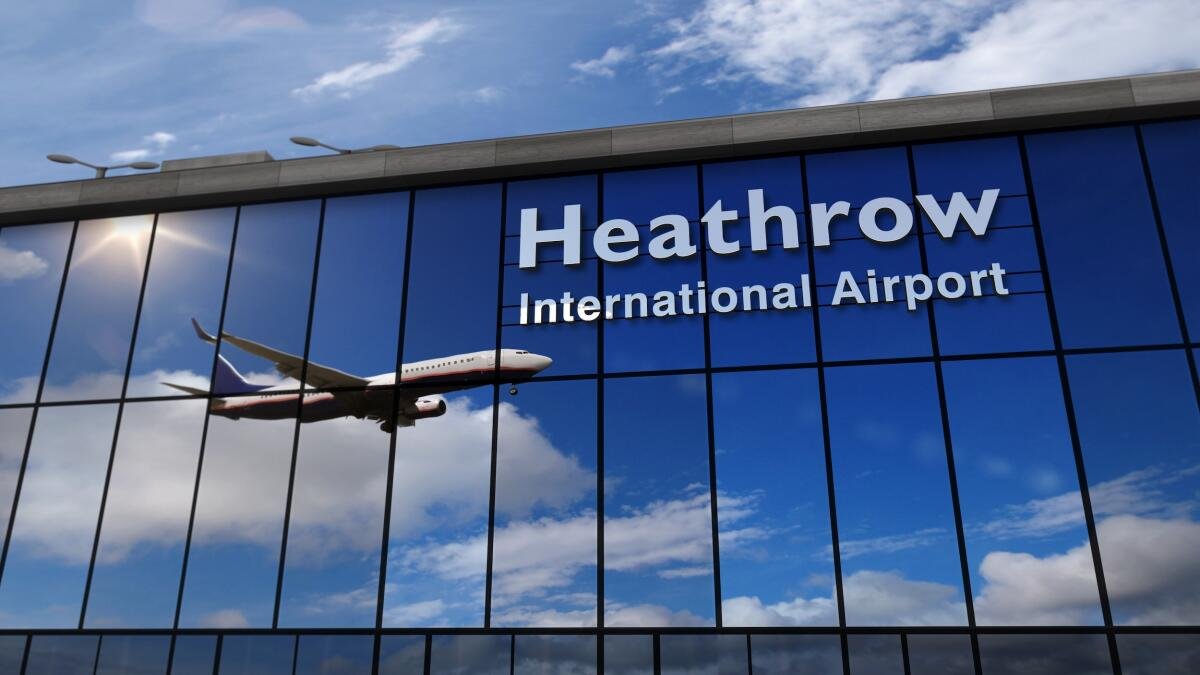
London Heathrow Airport is witnessing a decline in passenger traffic as ongoing geopolitical tensions in the Middle East continue to disrupt global aviation patterns. The conflict, particularly involving Iran, has significantly impacted travel demand and altered key international flight routes, affecting one of the world’s busiest airports.
Recent reports indicate that Heathrow experienced a noticeable drop in passenger numbers, especially during April and May 2026. The downturn is largely attributed to reduced travel demand and a sharp fall in traffic to and from the Middle East. In fact, routes linked to the region saw one of the steepest declines, reflecting how geopolitical instability can quickly influence global mobility trends.
The Middle East plays a crucial role in international aviation due to its strategic position connecting Europe, Asia, and Africa. As tensions escalated, airlines were forced to reroute flights, reduce frequencies, or temporarily suspend services in affected regions. This shift disrupted traditional transit patterns, with fewer passengers choosing to travel through hubs like Heathrow.
In April alone, Heathrow recorded around a 5% drop in passenger traffic compared to the previous year, while travel linked to the Middle East plunged by over 50%. These figures highlight the severity of the disruption and the direct impact of geopolitical conflicts on aviation demand.
Despite the decline, not all regions experienced negative growth. Some routes to Africa, Asia-Pacific, and Europe showed resilience, with modest increases in passenger numbers. This suggests that while the Middle East conflict has affected certain corridors, global travel demand remains partially stable due to shifting passenger preferences and alternative routing strategies.
Interestingly, Heathrow also saw an increase in transfer passengers as airlines adjusted routes to avoid conflict zones. Travelers who would typically transit through Gulf hubs began rerouting via European airports, offering some level of support to Heathrow’s traffic volumes. However, this was not enough to offset the broader decline in overall passenger numbers.
Noteworthy is that there were also more connecting passengers at Heathrow due to airlines changing their flight paths to circumvent conflict areas. Passengers who would normally connect via Gulf hubs now chose alternative routes through European airports. Nevertheless, this could not compensate for the overall fall in passenger numbers.
Another emerging trend is the shift in airline network planning. Carriers are increasingly prioritizing safer and more stable air corridors, even if it means longer travel durations. This has led to adjustments in scheduling, fleet deployment, and operational planning, further influencing passenger flow at major hubs like Heathrow.
Additionally, travel sentiment among passengers has been affected by uncertainty surrounding the conflict. Leisure and business travelers alike are becoming more cautious, with some postponing or canceling trips altogether. This behavioral shift is contributing to the softening demand seen across several international routes.
Additionally, rising operational costs, including fuel prices and airline expenses, are adding further pressure on the aviation sector. Airlines are facing increased costs due to longer flight routes and higher fuel consumption, which may eventually lead to higher ticket prices or reduced travel demand.
Industry experts believe that prolonged instability in the Middle East could continue to reshape global aviation flows. Major hubs like Heathrow, which rely heavily on international connectivity, are particularly vulnerable to such disruptions. The situation underscores the interconnected nature of global travel and how external geopolitical factors can influence passenger behavior on a large scale.
From a broader perspective, the current situation also highlights the importance of diversification in airline networks and airport revenue streams. Airports that rely heavily on specific regions may face greater risks during geopolitical crises, emphasizing the need for balanced international connectivity.
Looking ahead, Heathrow remains cautiously optimistic. While short-term challenges persist, the airport is adapting to changing travel patterns and working closely with airlines to maintain connectivity. The long-term outlook will largely depend on the resolution of the conflict and the restoration of stability in key aviation corridors.
Overall, the dip in Heathrow’s traffic serves as a clear reminder of how sensitive the aviation industry is to global events. As airlines and airports navigate these uncertainties, flexibility and resilience will be key to sustaining growth in an ever-changing travel landscape.

