
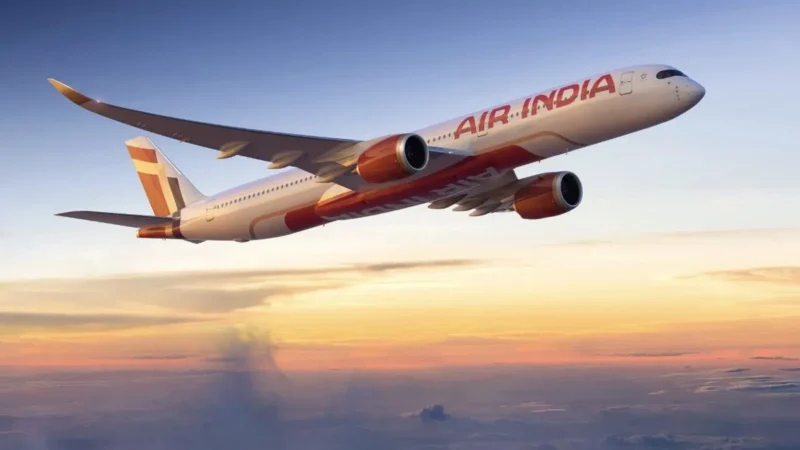
Air India passengers experienced a frightening journey after Flight AI2379 travelling from Phuket, Thailand, to New Delhi encountered severe mid-air turbulence, resulting in injuries to several passengers and cabin crew members. Despite the unexpected incident, the aircraft landed safely at Delhi’s Indira Gandhi International Airport, where medical teams were already on standby to assist those affected.
According to airline officials, the Airbus A320 experienced a brief but significant turbulence event while cruising at altitude. During the incident, the aircraft underwent a sudden change in altitude, causing unrestrained passengers and crew members to be thrown from their seats. Cabin luggage shifted, service equipment moved across the aisle, and panic spread throughout the aircraft.
Initial reports confirmed that at least 12 people, including passengers and cabin crew, sustained injuries. Most injuries were described as minor, including head, neck, shoulder, and ear injuries caused by impact with overhead bins or cabin fixtures. However, some passengers required hospital observation after landing as a precaution.
Air India stated that passenger safety remained its highest priority throughout the event. The airline confirmed that the flight crew followed all standard operating procedures during the turbulence encounter and safely completed the flight to Delhi. Emergency medical personnel were positioned at the airport before arrival to ensure injured travellers received immediate treatment.
Civil Aviation Minister Ram Mohan Naidu later visited injured passengers in hospital and assured them that the government would provide every possible assistance. Aviation regulators, including the Directorate General of Civil Aviation (DGCA), have begun reviewing the incident to determine the exact circumstances surrounding the turbulence encounter and whether additional safety recommendations are required.
Aviation experts note that turbulence is a common weather-related phenomenon that can occur without warning, even when skies appear clear. Modern aircraft are specifically engineered to withstand severe turbulence, and pilots receive extensive training to manage such situations safely. While turbulence can cause injuries, particularly when passengers are not wearing seat belts, it rarely threatens the structural integrity of commercial aircraft.
The incident has once again highlighted the importance of passengers following crew instructions throughout a flight. Airlines worldwide advise travellers to keep their seat belts fastened whenever seated, even if the seat belt sign has been switched off. Many turbulence-related injuries occur because passengers stand up or remove their seat belts during periods of smooth flight before unexpected turbulence develops.
Eyewitness accounts described scenes of confusion inside the cabin as the aircraft suddenly jolted. Several passengers reported that beverages, personal belongings, and loose items were thrown into the air. Cabin crew immediately suspended onboard service to assist injured travellers and reassure anxious passengers until the aircraft stabilised.
Following the safe landing, airport emergency teams quickly boarded the aircraft to assess passengers requiring medical attention. Several injured travellers were transported to nearby hospitals for further evaluation, while others were treated at the airport before continuing their journeys. Air India also extended assistance to affected passengers and their families.
Although turbulence incidents are relatively uncommon, aviation experts believe changing weather patterns may contribute to an increase in unexpected turbulence events globally. Airlines continue investing in advanced weather forecasting technology, improved flight planning systems, and enhanced pilot training to minimise such risks and ensure passenger safety.
The Air India Phuket-Delhi incident serves as a reminder that while commercial aviation remains one of the safest modes of transport, passengers should always follow onboard safety instructions and remain seated with their seat belts securely fastened whenever possible. Authorities are expected to complete their investigation in the coming weeks, and any recommendations aimed at improving flight safety will likely be shared with airlines across the industry.

