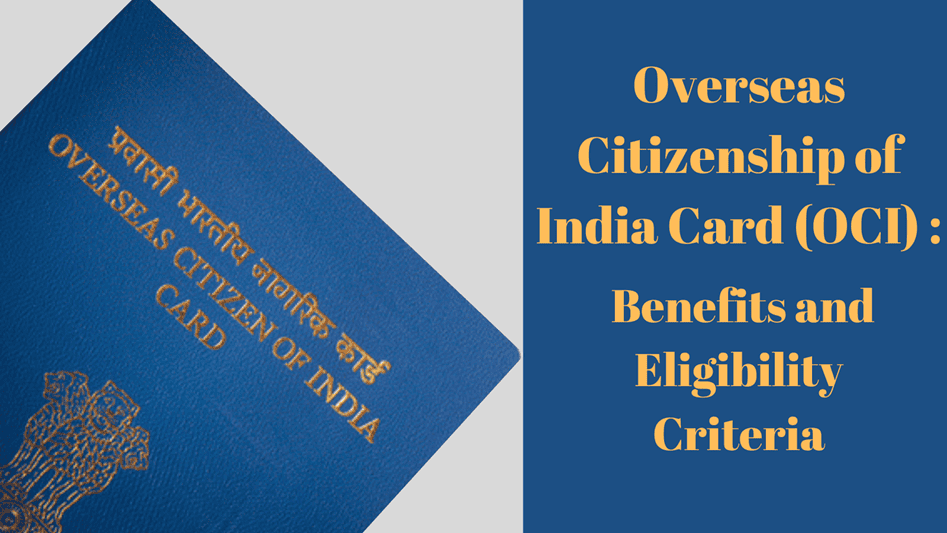
India has introduced a major overhaul of the Overseas Citizenship of India (OCI) system after nearly a decade, bringing significant changes to fees, passport update rules, and application procedures. These updates are designed to simplify the process while improving compliance and digital integration for millions of OCI cardholders worldwide.
One of the most important changes is the revised fee structure. The government has standardized OCI charges across different regions to create a more transparent and uniform system. As per the new structure, fresh OCI applications submitted within India will cost around ₹15,000, while applications filed abroad will be approximately $275. Re-issuance of OCI cards due to passport changes or personal detail updates has been reduced to about $25, making it more affordable for applicants.
In addition to fee revisions, the government has introduced stricter rules regarding passport updates. OCI cardholders are now required to update their passport details online within three months of receiving a new passport. Failure to comply with this timeline may result in a penalty of around $25.
Another major shift is the move towards a fully digital system. OCI holders are no longer required to frequently reissue their cards after every passport renewal. Instead, they must upload their new passport details and photographs through the official online portal. This eliminates unnecessary paperwork and simplifies the overall process.
The government has also removed certain outdated requirements. For example, the earlier six-month stay requirement for applying for OCI from within India has now been eliminated. This makes it easier for eligible applicants, especially foreign spouses and children of Indian origin, to apply without long waiting periods.
In terms of travel, OCI cardholders must now ensure they carry both their valid passport and OCI card when entering India. Additionally, a shift toward digital travel documentation means travelers may be required to complete online arrival forms instead of traditional paper-based systems.
These updates are part of a broader effort by the government to modernize the OCI framework and align it with current global mobility trends. With over six million OCI cardholders worldwide, the changes aim to improve efficiency, reduce processing delays, and enhance security.
However, while the new rules simplify many aspects, they also place greater responsibility on applicants to stay compliant. Missing deadlines, especially for passport updates, can lead to penalties or complications during travel. Therefore, OCI holders are advised to stay informed and regularly check official updates.
Overall, the new OCI system reflects India’s push toward digital governance and streamlined immigration processes. For existing and future OCI applicants, understanding these changes is essential to ensure smooth travel and documentation management in 2026 and beyond.