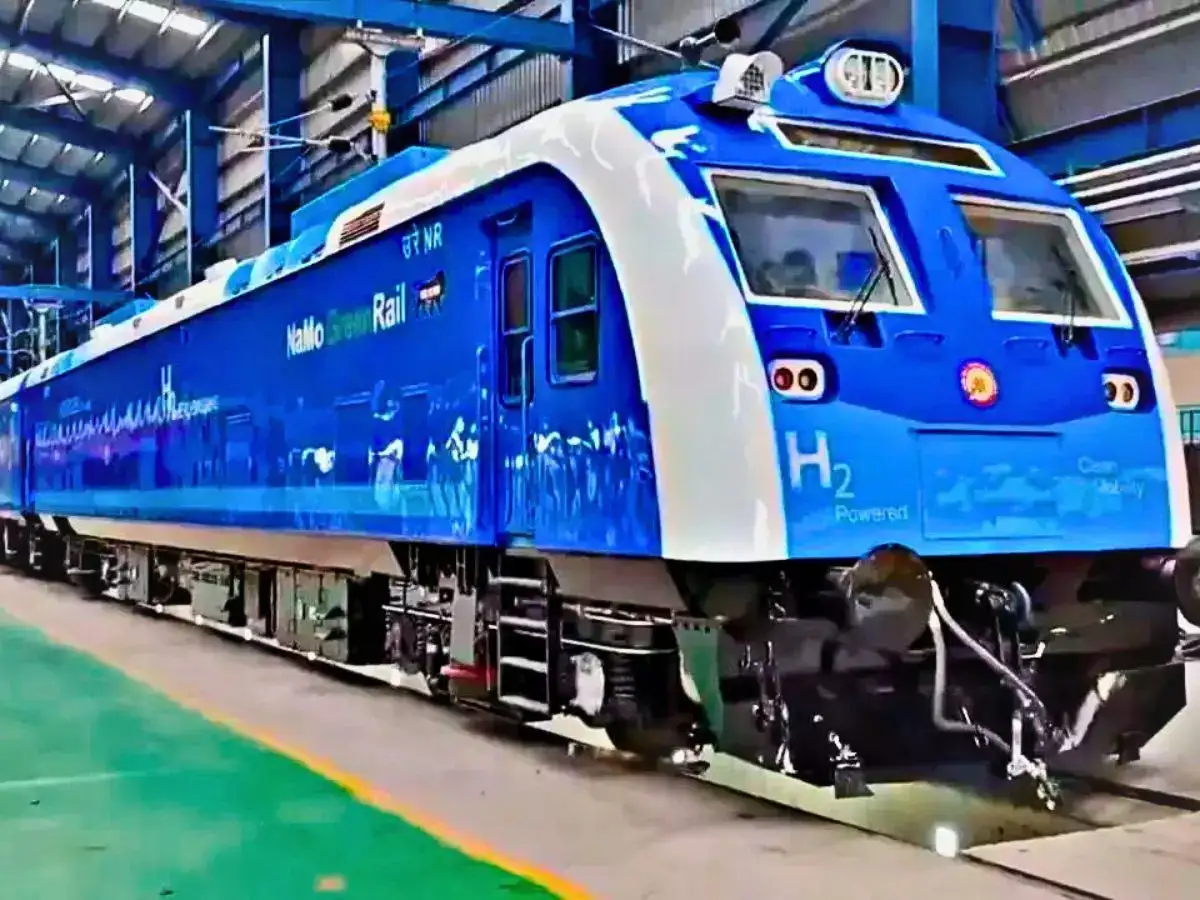
India has taken a significant step toward sustainable transportation with the successful completion of more than 1,200 kilometers of trial runs for its first hydrogen-powered train. The achievement demonstrates the country’s commitment to adopting clean energy technologies while reducing dependence on conventional diesel-powered rail operations. According to Indian Railways, the trials have already resulted in fuel savings of over 3,200 liters of diesel, highlighting the efficiency and environmental benefits of hydrogen-powered transportation.
Unlike conventional diesel locomotives, the hydrogen-powered train uses fuel cell technology to generate electricity. Hydrogen stored onboard reacts with oxygen inside fuel cells, producing electrical energy that powers the train’s motors. The only byproduct of this chemical reaction is water vapor, making the system virtually free from harmful emissions. This innovative technology has the potential to significantly reduce carbon emissions from railway operations and contribute to India’s long-term climate goals.
The successful completion of extensive testing marks an important milestone before the technology enters commercial passenger operations. Engineers monitored multiple performance parameters during the trials, including power generation, fuel efficiency, safety systems, braking performance, and operational reliability under different railway conditions. The positive results indicate that hydrogen technology can become a practical alternative for non-electrified railway routes in the future.
Hydrogen-powered trains have already been introduced in a few countries, particularly in Europe, where they serve routes that are not economically viable for complete railway electrification. India now joins a growing group of nations investing in hydrogen-based mobility solutions as part of broader efforts to achieve cleaner transportation systems and reduce greenhouse gas emissions.
One of the biggest advantages of hydrogen trains is their ability to operate on routes where installing overhead electric lines may be technically difficult or financially expensive. Instead of relying on diesel engines, these trains generate electricity onboard, providing quieter operations, lower maintenance requirements, and significantly reduced environmental impact.
The successful trials also demonstrate India’s progress under its broader National Green Hydrogen Mission, which aims to position the country as a global leader in hydrogen production and utilization. The railway sector is one of several industries expected to benefit from increased adoption of hydrogen technology, alongside heavy transportation, manufacturing, and power generation.
Apart from environmental benefits, hydrogen-powered trains could help reduce India’s dependence on imported fossil fuels over the long term. As domestic hydrogen production expands, operating costs may become increasingly competitive, making clean rail transport both economically and environmentally sustainable.
Passengers may not immediately notice significant differences inside hydrogen-powered trains compared to conventional services. However, they can expect quieter journeys, smoother acceleration, and the reassurance that their travel contributes to lower carbon emissions. The technology also supports India’s ambition to modernize railway infrastructure while improving energy efficiency.
Safety remains a top priority throughout the development process. Hydrogen storage systems are designed with multiple protective layers, advanced sensors, automatic leak detection, and emergency shutdown mechanisms to ensure safe operation under various conditions. Extensive testing during the trial phase helps validate these systems before public deployment.
Industry experts believe hydrogen-powered trains could become an important component of India’s future railway network, particularly on regional and heritage routes where electrification is limited. Continued investment in hydrogen infrastructure, fuel production, and technological innovation will play a crucial role in expanding the adoption of this clean transportation solution.
The successful 1,200-kilometer trial is more than just a technological achievement. It reflects India’s growing focus on innovation, sustainability, and energy independence. As hydrogen technology continues to mature, Indian Railways is taking meaningful steps toward creating a cleaner, greener, and more efficient transportation network for future generations.