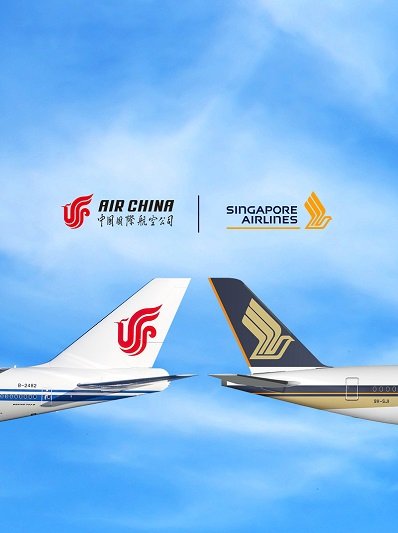
The signing of the MoU by Air China and Singapore Airlines is one giant leap towards strengthening their relationship through increased cooperation. This milestone in the ongoing relationship between the two airlines signifies that they will be working towards providing increased connectivity and better services to the customers.
This Memorandum of Understanding provides the base for the joint venture partnership that will allow both the airlines to work together in a much better way in various operational aspects. These include codeshare flights, scheduling coordination, fare products, revenue sharing, and many more. All these efforts are anticipated to provide a seamless travel experience to customers.
This collaboration capitalizes on the existing affiliation of Air China with Singapore Airlines, and which has been there for some time. The purpose is to take advantage of this affiliation to explore business opportunities in one of the fastest growing sectors in the aviation industry – Asia Pacific.
One of the most important things that will come out of the agreement is increased connectivity of China and Singapore with other destinations in the airlines’ networks. People will benefit from more choices of flights, better schedule coordination, and efficient transfers. It will be easier to travel through multiple destinations now.
In addition to enhancing connectivity, the strategic alliance is also anticipated to provide additional value for customers. Through offering competitive pricing, loyalty program advantages, and consistent services, the airlines will create a more favorable customer experience. This customer-based strategy is part of a wider trend in the airline industry that sees the establishment of airlines alliances to cater to customer demands.
The memorandum was signed at Beijing by top-level officials from the two airline companies, indicating the importance of the tie-up in the strategic sense. This is a clear indication of the cooperation that is emerging between China and Singapore within the aviation industry.
The professionals within the industry feel that this partnership may develop into a joint venture, depending on the regulatory approvals obtained for the same. In case this happens, it will help in managing the routes collectively, sharing the revenues, and managing the capacities efficiently.
Another significant point about the timing of the deal is that the airline industry has been experiencing recovery and growth over the past few years after going through some disruptions around the world. The demand for flying in the Asia-Pacific region is increasing due to growing tourism, business flights, and economy. Air China and Singapore Airlines are partnering up to benefit from this demand.
Additionally, the alliance would help enhance the position of both the airlines in the market. With Air China being one of the largest airlines in China, it has an advantage of good connectivity within and outside the country whereas Singapore Airlines is famous for its excellent customer service and worldwide network. Therefore, such an alliance can compete with other airline groups.
Strategic alliances have been emphasized through the MoU as well since, in the current aviation industry, collaboration has become necessary for expansion purposes rather than depending entirely on growth alone. Through this method, airlines can offer a greater number of destinations without increasing their cost base.
The benefits that this collaboration will bring about for passengers will be evident as well. More convenient schedules, shorter travel time and better service are guaranteed.
In the future, the success of this collaboration will rely upon the ability of both airlines to implement their plans successfully and cope with all regulatory challenges they may face during this process. Nonetheless, the signed Memorandum of Understanding provides a great base for the further work in this area.
Overall, this collaboration is a good step towards the improvement of connectivity in the region and even worldwide. In the course of collaboration, both airlines will be able to strengthen their competitive advantage in the aviation sector and contribute to the development of the entire aviation industry in the Asia-Pacific region.
Collaborations such as this one will continue playing an increasingly important role in the aviation industry in the future and make the air travel much more convenient for travelers.