
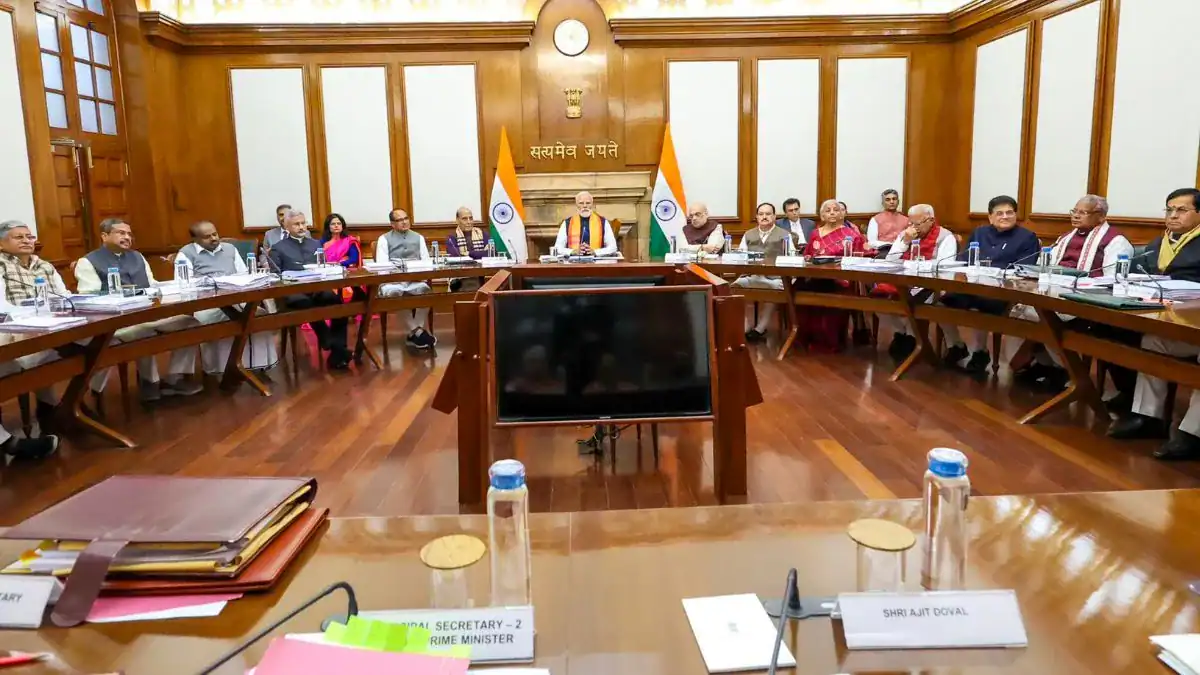
The Government of India has made a significant move in enhancing its immigration facilities by approving the continuation of the Immigration, Visa, Foreigners Registration, and Tracking (IVFRT) scheme. This move by the Government of India is a testament to its commitment to strengthening both national security and the overall visitor experience for international travelers.
The Union Cabinet has approved the continuation of the Immigration, Visa, Foreigners Registration, and Tracking (IVFRT) scheme for a period of five years from April 1, 2026, on a budget of about ₹1,800 crore.
The IVFRT scheme has a vital role to play in the digitization and integration of immigration-related services in India. Using the latest technology, including AI and data analysis, the system will be able to provide real-time tracking and information sharing between different agencies. This will not only reduce the processing time but also increase transparency in immigration procedures.
One of the major objectives of the IVFRT scheme is to ensure that immigration takes place in a legitimate manner while maintaining strict vigilance against potential security risks. It is also important to ensure that the ease of travel and immigration is not compromised at the same time. As the number of international visitors continues to increase, the need for such technology advancements cannot be neglected.
The role of the IVFRT scheme is very significant in terms of the digitization and integration of immigration-related services in India. By employing the latest technologies, including AI and data analysis, it will be possible for real-time tracking and information sharing to be conducted. This will, in turn, not only minimize the processing time but also ensure transparency in immigration-related activities.
One of the main objectives of the IVFRT scheme is to ensure that immigration is conducted in a legitimate manner, keeping a strict vigil on all potential security-related issues. At the same time, it is very important that the ease of travel and immigration is not compromised. As the number of international visitors is on the rise, it is very important that such technology advancements are not ignored.
In addition to this, the IVFRT scheme also helps to improve the border control mechanisms in the country. This is because the central database of foreign visitors can help to monitor their movements and ensure that they do not overstay. This is particularly important in today’s global environment where security issues are constantly changing.
The extension of this scheme also shows that India is a forward-thinking country when it comes to embracing technology in governance. By investing in this advanced technology and infrastructure, the Indian government is ensuring that its immigration control is at par with the rest of the world. This is not only beneficial for the confidence of international travelers coming to India but also for the country’s reputation.
Moreover, this IVFRT initiative is also likely to contribute to economic growth through an increase in tourism and ease of international business travel. A simplified immigration process will allow more tourists to enter India, which will be beneficial for various industries.
The Union Cabinet has given its nod to extend the implementation of the Immigration, Visa, Foreigners Registration and Tracking (IVFRT) Scheme beyond 31st March 2026. This scheme is to be extended for an additional period of five years from 1st April 2026 to 31st March 2031. The approved budget outlay is for ₹1,800 crore. This is indicative of the government’s commitment to improving immigration systems while facilitating smooth and efficient travel. This is not only an extension of an existing scheme but also indicative of a larger commitment towards digitization in immigration and visa procedures.
The continuation of the IVFRT scheme is a strategic step towards a modern immigration system in India. With this initiative’s emphasis on security, efficiency, and user experience, it is all set to play a vital role in writing the future of immigration and travel in India. India is transforming itself into a global hub, and this is essential for its growth and development.