
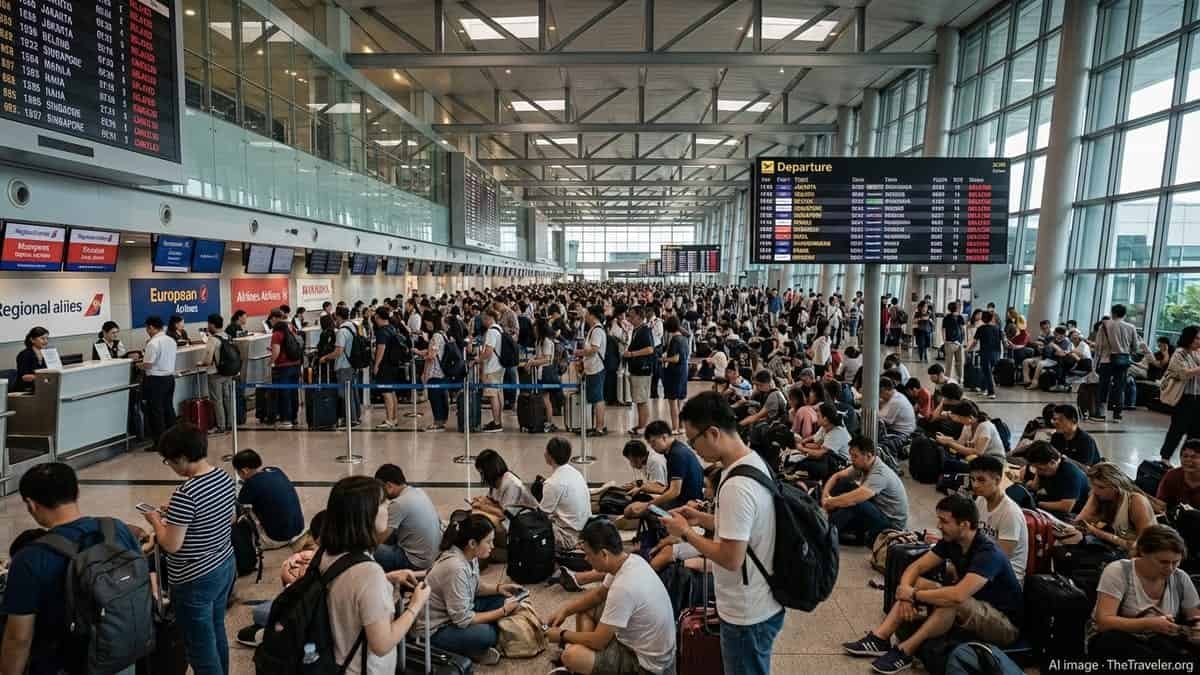
Thousands of Travelers Experience Flight Disruptions Across Asia
Air travel in Asia is experiencing massive flight disruptions as thousands of travelers have experienced flight delays and cancellations across various countries in Asia. Major air travel hubs in Singapore, Japan, China, the United Arab Emirates, India, and Indonesia have experienced flight disruptions.
According to recent air travel statistics, a total of 213 flights have been cancelled across major air travel hubs in Asia, while over 2,118 flights have experienced flight delays in the region.
Major Airports Witness Heavy Operational Disruptions
The major airports in the Asian region witnessed the highest number of delays and cancellations during this disruption wave. Airports in major cities such as Delhi, Mumbai, Dubai, Tokyo, Beijing, Jakarta, and Singapore were among the worst-hit by the disruptions.
At the Indira Gandhi Airport in Delhi, India, the highest number of flights were delayed. The disruption saw more than 500 flights being delayed. Mumbai also witnessed significant disruptions at its airport. Hundreds of flights were delayed, and several flights were canceled.
Meanwhile, Dubai airport witnessed the highest number of cancellations. Jakarta and Singapore airports also witnessed several flights being delayed.
Airlines Across Regions Face Operational Challenges
The disruption has been affecting several major global and regional airlines. Major airlines such as Air India, IndiGo, Emirates, Japan Airlines, Air China, and FlyDubai are facing operational challenges as the schedules of the flights are heavily affected by the disruption.
The low-cost and full-service carriers are facing the challenges of the disruption. This shows that the disruption has been affecting all the airlines and has not been limited to a particular airline. The passengers are facing long waiting times and are also unsure of their plans.
Causes Behind the Disruptions
Although there could be various causes of these disruptions, depending on their geographical locations, there is a general consensus that such widespread aviation challenges could result from a number of factors, including weather, air traffic, technical problems, and constraints, especially around such busy air routes.
Experts have pointed out that, especially where there is such high interconnectivity between air routes, even a minor problem could result in widespread delays across many regions, especially where such critical air routes have been affected.
Experts have pointed out that, especially where there is such high interconnectivity between air routes, even a minor problem could result in widespread delays across many regions, especially where such critical air routes have been affected. Experts have pointed out that, especially where there is such high interconnectivity between air routes, even a minor problem could result in widespread delays across many regions, especially where such critical air routes have been affected. Experts have pointed out that, especially where there is such high interconnectivity between
Impact on Passengers and Travel Plans
The disruptions resulted in thousands of passengers being stranded at airports in Asia due to missed flights, long waiting times, and lack of availability of connecting flights.
The airlines and airports took measures to tackle the problem, including deploying more staff to help passengers cope with the disruptions. However, it was difficult to clear all flights due to the sheer volume of disruptions.
Travelers were advised to check their flights frequently, especially if their itineraries involved airports in Asia, to avoid any problems due to potential delays.
Aviation Industry Faces Growing Pressure
The incident also points to the rising pressure faced by the aviation industry around the world due to a rise in travel demands. Airports and aviation companies are struggling with various operational challenges.
Experts have suggested that there is a need to strengthen aviation infrastructure and coordination between airlines and use better technology to resolve such issues more efficiently.
As international travel resumes and grows, it will be important to ensure that aviation operations are resilient in order to avoid disruptions in the future.