
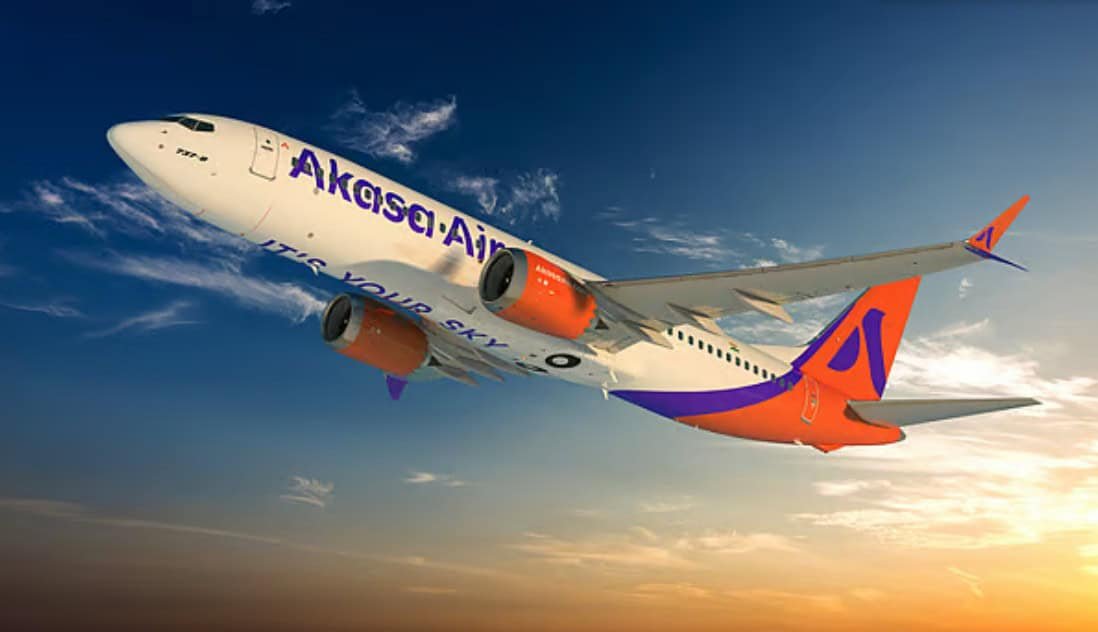
India’s aviation sector is witnessing rapid expansion, and Akasa Air is emerging as a key player in this growth story. The airline has recently inducted its 38th aircraft, marking another milestone in its aggressive expansion strategy. This latest addition highlights the airline’s commitment to increasing capacity and strengthening its presence across domestic and international markets.
The newly inducted aircraft is a Boeing 737 MAX 8-200, a modern and fuel-efficient aircraft designed to support high-density operations. With this addition, Akasa Air has now added seven aircraft in just the first four months of 2026, demonstrating a strong pace of growth aligned with rising passenger demand.
The aircraft arrived in Bengaluru after completing a multi-leg delivery journey, showcasing the global logistics involved in fleet expansion. This addition is not just about increasing numbers but also about enhancing operational efficiency and network reach. The airline aims to utilize these aircraft to strengthen connectivity across key routes and improve frequency on high-demand sectors.
Since its launch in 2022, Akasa Air has rapidly scaled its operations, positioning itself as one of India’s fastest-growing airlines. The airline operates a modern fleet focused on efficiency and passenger comfort, allowing it to compete effectively in the highly competitive Indian aviation market.
The expansion to 38 aircraft reflects the airline’s broader vision of capturing a larger share of India’s booming air travel market. With increasing disposable incomes, improved regional connectivity, and a growing preference for air travel, demand across both metro and tier-2 cities is rising steadily. Akasa Air is strategically expanding its fleet to meet this demand while maintaining cost efficiency.
One of the key drivers behind this growth is the airline’s substantial aircraft order book. Akasa Air has placed orders for over 200 Boeing 737 MAX aircraft, with many deliveries scheduled over the coming years. This long-term investment signals the airline’s intent to become a major force in both domestic and international aviation markets.
The addition of new aircraft will also enable the airline to expand its route network and introduce new destinations. Increased fleet size allows for better scheduling, improved connectivity, and enhanced customer convenience. As competition intensifies among Indian carriers, such expansion becomes crucial for sustaining market share and delivering consistent service quality.
From an industry perspective, Akasa Air’s growth reflects broader trends in Indian aviation. The country is currently one of the fastest-growing aviation markets globally, with airlines investing heavily in fleet expansion and infrastructure development. Government initiatives, airport modernization, and rising tourism are further supporting this upward trajectory.
The airline’s focus on modern aircraft technology also contributes to operational efficiency. The Boeing 737 MAX series is known for fuel savings and reduced emissions, aligning with global sustainability goals. This makes fleet expansion not only a growth strategy but also a step toward more environmentally responsible aviation practices.
Looking ahead, Akasa Air is expected to continue its rapid expansion, with more aircraft deliveries planned in the coming months. The airline’s ability to scale efficiently while maintaining service quality will be a key factor in its long-term success. Industry experts believe that such consistent growth will strengthen its position as a competitive player in India’s aviation landscape.
In conclusion, the induction of the 38th aircraft marks a significant milestone for Akasa Air. It reflects strong operational momentum, strategic planning, and confidence in the future of India’s aviation market. As demand continues to rise, the airline’s expanding fleet will play a crucial role in connecting more destinations and enhancing travel options for passengers across the country.

