
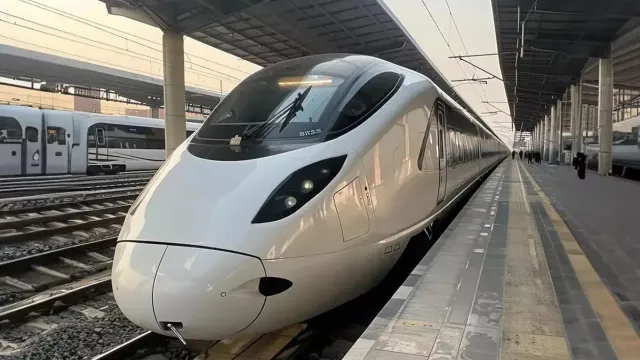
Hyderabad’s Bullet Train Dream Gains Momentum
The vision of introducing a high-speed bullet train network connecting Hyderabad with major cities is steadily gaining traction, as the Indian government moves forward with new infrastructure plans. The latest developments indicate that the long-awaited project is entering a crucial planning phase, bringing the possibility of ultra-fast rail travel closer to reality.
The initiative is part of the broader high-speed rail expansion announced in the Union Budget 2026–27, which aims to transform intercity travel across India. Hyderabad has emerged as a key hub in this ambitious plan, with multiple corridors proposed to connect the city with other major economic centers.
DPR Preparation for Key Rail Corridors
A major step forward in the project is the preparation of Detailed Project Reports (DPRs) for new high-speed rail corridors. The central government has approved DPR work for routes linking Hyderabad with Chennai and Bengaluru, two of South India’s most important metropolitan cities.
Officials have indicated that these DPRs are expected to be completed within a defined timeline, likely between late 2026 and early 2027. Once finalized and approved, the projects will move to the construction phase based on feasibility, funding, and implementation strategies.
Additionally, the DPR for the Pune–Hyderabad corridor has already been prepared and is currently awaiting approval, further strengthening Hyderabad’s position in the high-speed rail network.
Strategic Importance of Hyderabad in Rail Network
Hyderabad’s inclusion in multiple high-speed corridors highlights its growing importance as a transportation and economic hub. The proposed network aims to significantly reduce travel time between cities, making rail travel a competitive alternative to air travel.
For instance, once operational, travel time between Hyderabad and Bengaluru could be reduced to around two hours, while journeys to Chennai may take under three hours.
Such improvements are expected to enhance connectivity, boost business travel, and support regional economic growth across southern India.
Survey Work and Route Planning
Preliminary survey work for the proposed corridors has already been conducted by infrastructure consultancy firms, laying the groundwork for project execution. The Telangana government has also proposed that the high-speed rail corridor originate from Shamshabad, a key area near Hyderabad’s international airport.
This location is being considered as a potential hub due to its strategic connectivity and availability of land. Authorities are evaluating the proposal as part of the overall planning process.
The Parliamentary Standing Committee on Railways has emphasized the need to complete land acquisition and obtain statutory clearances before the projects are formally approved. This step is crucial to ensure smooth execution and financial viability.
Economic and Infrastructure Impact
The development of high-speed rail corridors is expected to bring significant economic benefits to the region. Improved connectivity between Hyderabad, Chennai, Bengaluru, and Pune will facilitate faster movement of people, goods, and services.
Experts believe that such infrastructure projects can boost sectors like tourism, technology, and trade by reducing travel time and increasing accessibility. The proposed corridors are also expected to create employment opportunities and support urban development along the routes.
Moreover, the introduction of bullet trains aligns with India’s long-term vision of modernizing its transportation infrastructure and achieving faster, more efficient mobility.
Challenges and Next Steps
Despite the positive momentum, several challenges remain before the project becomes a reality. Land acquisition, funding arrangements, and environmental clearances are among the key factors that need to be addressed.
The Railway Board will review the DPRs once they are completed, after which final approvals will be granted. Only then can construction begin on the proposed corridors.
Authorities are also exploring ways to ensure that the projects are financially sustainable while delivering maximum benefits to passengers and the economy.
A Step Toward High-Speed Travel in India
The progress of Hyderabad’s bullet train project marks an important milestone in India’s journey toward high-speed rail connectivity. As planning moves forward and approvals are secured, the dream of faster, more efficient travel between major cities is gradually becoming a reality.
If successfully implemented, the project could redefine transportation in southern India, offering a modern, reliable, and time-saving alternative to existing travel options.